

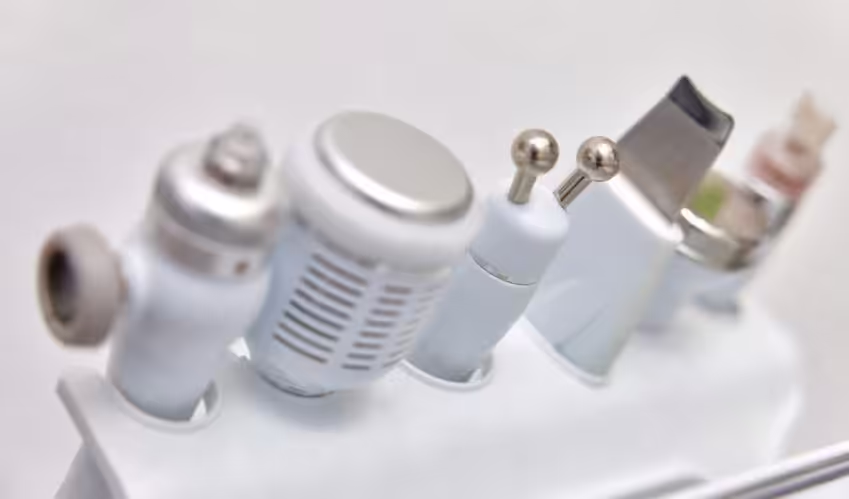
The Growing Role of Beauty Devices in Personalized Skincare
The personal care and cosmetics sector has been subject to an enormous change. Today’s consumers require skincare that suits their specific needs and beauty devices play a large role in the new trend toward individualized treatments, by bringing technologies of cleansing, exfoliation, skin rejuvenating, moisturising or anti-acne into our day-to-day lives. The trend is further growing with an increasing access to a wider range of at-home devices, which allow users to manage their daily beauty routines not only with the aid of salon treatments but also with their own dedicated piece of technology at home.
The global market for beauty devices was assessed to be roughly USD 36.99 Billion in 2025 and is predicted to expand at a Compound Annual Growth Rate (CAGR) of 4.40% to the amount of USD 56.90 Billion by 2035. Driving this market are consumer demands for personalized skin care, new technologies, higher incomes, a rise in at-home aesthetic treatments and so forth.
Personalization is extremely key with consumers having a far greater awareness of their needs. Instead of following exact similar procedures, individuals seek out specific products or devices for the needs of skin aging, skin pigmentation, dry skin, sensitive skin, uneven skin tone or acne skin care. Beauty devices are bridging the gap between ‘standard’ skin care and customized regimes.
Rising Demand for Personalised Skincare
Customized skincare is a rapidly trending concern because people are now increasingly aware that we’re not all born with identical skin conditions or similar skin needs. A person’s age, life circumstances, living conditions, genetics, skin type and living patterns-to mention just a few-can impact the appearance of your skin in different ways.
In the way that specific devices have targeted functions addressing distinct concerns with beauty needs. Beauty consumers can now buy devices according to particular personal needs – thus a growing trend is integrating technology in our customised beauty treatments. There is also an increased concern for education regarding skincare and how technology might be utilized and can even supplement our existing regimen- which is encouraged with greater availability of skincare insights, online resources, beauty contents and online beauty communities.
Growth of At-Home Beauty Treatments
One key growth driver is consumer desire to perform treatments at home. Many consumers prefer not to schedule appointments at salons, spas or professional facilities for their regular skincare treatments.
At-home beauty devices offer greater convenience as they may be integrated into a current daily or weekly routine. Cleansing brushes, facial massagers, LED devices, microcurrent tools and other technologies enable consumers to conduct selected beauty treatments at home.
This added convenience is appealing especially for consumers who lead busy lives. With demanding lifestyles, beauty devices that promote convenience and time efficiency are likely to continue as one area that contributes to market growth.
Technological Advancements in Beauty Devices
Continuous development and research in technology have been driving the advancement of beauty devices. Modern devices possess improved sensors, varied treatment modes, multiple levels of intensity and are generally rechargeable and more ergonomic to use.
To take things to a more personalized level, some hi-tech devices are now also being incorporated with smart features that give the user the ability to control the level of settings that would suit them more. Through the connection of such devices with mobile devices or other platforms, usage information can be accessed more easily, hence enhancing overall use of the beauty devices.
These enhancements are not only making the beauty devices more complicated but more readily available as well. When the technology becomes more user-friendly, even those who are unfamiliar can manage the use of device-based treatments in their personal beauty routines.
Growing Interest in Anti-Ageing Solutions
Another of the driving forces behind the beauty device demand comes from society’s obsession to remain young looking. Consumers are paying more attention and are seeking beauty solutions that will target the physical signs of aging: that is; fine lines and wrinkles, firmness and texture of skin on face. It’s these demands for skin-based regeneration that are increasing consumer appeal of beauty devices above and beyond cosmetic products and serums.
Technologies such as LED Light therapy, micro-current devices, radiofrequency (RF) devices and sonic facial and anti-aging massage beauty devices are already emerging in the market places, in great numbers.
Demand from those interested in anti- aging and premature skin care prevention is also stimulating cosmetic growth and demand in devices. Consumers are getting into the habit of undertaking the beauty treatment and developing skin prevention habits, earlier in life as consumers age in the population.
Increasing Influence of Social Media and Beauty Content
The influence of social media in raising awareness of beauty tech The growing adoption of consumer beauty devices has been largely driven by increased online awareness through the proliferation of beauty influencers, skincare professionals, product demos and user reviews and educational content on social media platforms.
Visual product demonstrations of beauty tech are invaluable due to consumers being able to learn the best way in which each product can be incorporated into their daily beauty ritual. The rise of and increased accessibility to devices such as face rollers and electric cleansers represent the mainstreaming of tech-focused beauty.
Due to this increase in demand for technology-oriented beauty and the increase in consumer experimentation on social media, it is predicted that demand for new devices to be introduced this coming year will also come from the tech-savvy youngest consumer demographic.
Expanding Consumer Interest in Wellness and Self-Care
Another arena that is offering a growing number of openings for beauty devices is the intensifying focus on wellness and self-care. Consumers are now tending to regard skin-care not just as an essential hygiene task, but rather part of a wider aspect of personal wellbeing. Beauty devices can support this idea by lending interaction and personal touches to our regimes – an idea we can see in beauty facial devices; washing tools, etcetera, that may add relaxing self-care to home regime. It also encourages the growth in brands who are increasingly selling beauty devices and technology through the notion of an aspect to personal lifestyle.
Demand for Professional-Looking Results at Home
Consumers are seeking to obtain high quality results from home, and they have fewer expectations of reliance solely on expert treatment. These factors are leading to the increasing consumption of innovative devices for home use that emulate professional beauty treatments or add certain components of their operation.
While professional treatments have many factors to them, home devices give consumers more control over at-home care, and are therefore appealing to consumers for in-between treatment services as well as more convenient in-home solutions. The increasing availability of more sophisticated devices will likely lessen the gap between traditional at-home beauty devices, and professional beauty technologies.
Personalisation Through Smart Technology
The use of smart technology is expected to grow and form a bigger part in personalized skincare with connected beauty devices potentially collecting user routines and preferences allowing consumers to adapt their own routines and allow greater control. AI and data technologies, for example, can also support personalized recommendations of particular treatments and routines through learning from user input and assisting users to select optimal treatment patterns and regimens.
This can ultimately help increase a sense of responsiveness within a particular device or experience. When devices are part of larger digital ecosystems with dedicated beauty applications, with personalized suggestions for use and products, consumer journeys for skincare, in the longer run, can develop into richer experiences.
It’s a compelling potential for those focused on technology within the beauty sector.
Expansion of Beauty Devices Across Consumer Segments
The users of Beauty Devices are now expanding far beyond the original select community of professionals or ultra-niche consumers. Greater availability and proliferation in both consumer segments, as well as age segments. While younger consumers might value innovative features and popular social media trends in beauty devices, the needs and aspirations of more mature consumers in regards to skin rejuvenation and anti-aging may be fundamentally different from those younger users.
This can also lead to product categorization targeted towards particular needs. The rise of e-commerce is adding momentum to product proliferation. Consumers compare product features, pricing, online consumer reviews and specifications for the right beauty device for his specific goal for skincare.
Sustainability and Product Innovation
The beauty sector and beauty device makers are catching up. They realize the market wants a long-life span, rechargeable items, minimize pack size, and green procedure when production the devices. There are several green choices that customers need as a replacement from non-recycling beauty products. The green style is to ensure more reliable gadgets & gadgets elements for making long run value device that iseco-friendly as well.
The firms likewise need to harmonize between efficiency & cost, which makes it tougher to create appealing green goods for consumers. It is tough for a brand to attain a dominant standing if it does not achieve any type of combination regarding effective tech, stylish layouts as well as additionally solid long-lasting products in this competitive industry.
Challenges in the Beauty Devices Market
While the beauty devices sector enjoys significant growth potential, its progression is not without obstacles. Prices of technologically advanced devices can prove prohibitively expensive and consequently hinder their purchase by cost-conscious consumers, especially within the developing markets.
Consumer education is also a critical aspect, the use, effective usage and expectations for beauty devices must be defined carefully with the consumer, aggressive claims can indeed impact consumer trust. With the increasing presence of traditional beauty firms, technology companies and specialized device manufactures increasing the products available on the market, companies must concentrate on innovation, safety, performance, user friendliness, and strong consumer engagement.
Future Growth Prospects
The global beauty devices market forecast is favorable as customized beauty trends gained traction. According to Expert Market Research, the market is expected to grow from roughly USD 36.99 Billion in 2025 to USD 56.90 Billion in 2035 at a 4.40% CAGR in the 2026-2035 decade. The future market is anticipated to be driven by the innovation in smart beauty technology, home-based treatments, growing consumer awareness, and Artificial Intelligence and digital integration in the beauty devices.
Connected devices offering smarter customized recommendations might start integrating into the daily routines of beauty devices. As consumer focus shifts toward tailor-made beauty treatments, beauty devices are predicted to increasingly become an intersection of both personal care products and technological advancements. Brands and manufacturers offering smart and integrated solutions could gain a foothold in the market.