

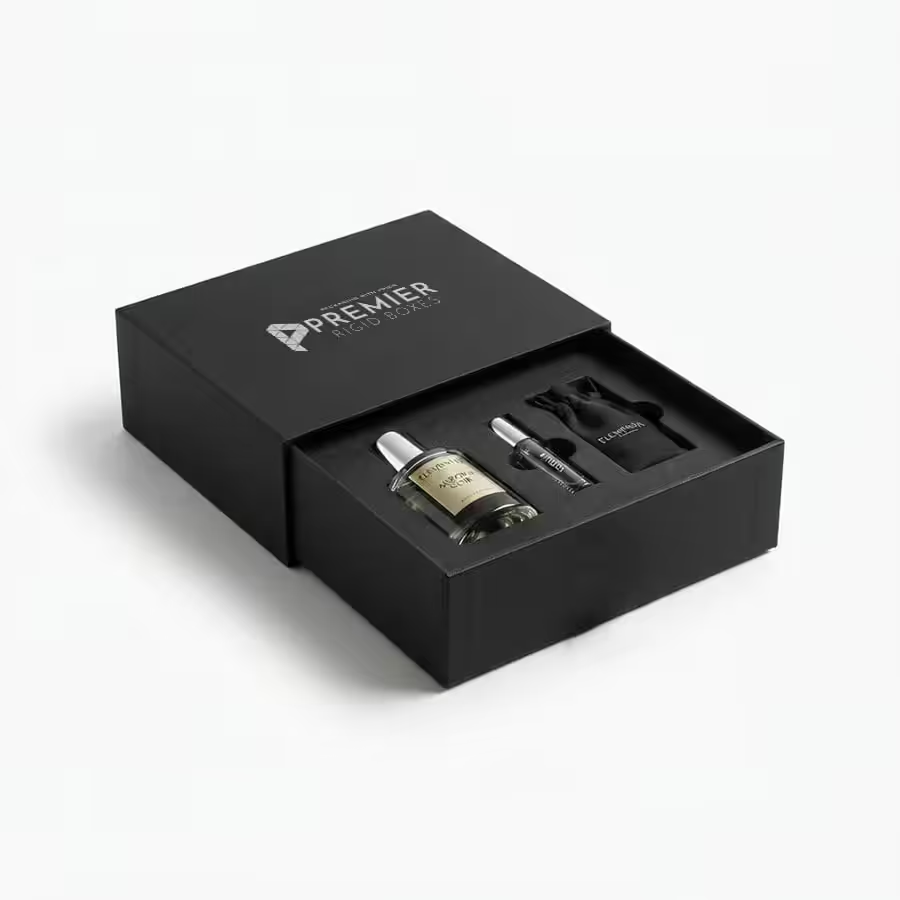
Crafted to Impress: Customizable Rigid Boxes for Every Brand
A small skincare founder told me once that she redesigned her packaging three times before launch, not because the product changed, but because every version still looked like it belonged to somebody else’s brand. Nice enough, technically fine, but interchangeable. It wasn’t until she started treating the box as an actual extension of the product, rather than just a container for it, that things clicked. That’s really the whole argument for going custom instead of settling for whatever’s already sitting in a supplier’s catalog.
Off-the-shelf rigid boxes aren’t bad, exactly. They’re just built to fit as many brands as possible, which usually means they end up fitting none of them particularly well. A custom rigid box, by contrast, gets shaped around what a specific product actually needs its dimensions, its story, sometimes even its weight distribution and that specificity is where the real impression gets made.
Why Customizable Means More Than Just a Different Logo
A lot of brands think customization stops at swapping in their own colors and printing their name on a generic box shape. That’s the smallest, least interesting layer of what customization can actually do. Real customization touches structure, not just surface box dimensions matched precisely to the product, interior layout designed around how the item should be discovered when the lid lifts, even closure mechanisms chosen specifically for how the product’s meant to be handled after purchase.
This distinction matters because customers, even without articulating it, can feel the difference between a box that was adjusted slightly and one that was actually designed around what it holds. The first feels like packaging. The second feels considered.
The Structural Choices That Actually Shape the Experience
Size and proportion set the tone before anyone’s even looked at the printing. A box that’s slightly oversized for its contents feels careless, like nobody checked the fit. One that’s snug and precise signals attention to detail immediately, just from how it sits in someone’s hands.
Interior structure matters just as much, maybe more. Rigid boxes with inserts, foam trays, fabric-lined cavities, or molded pulp shaped to a product’s exact form, do double duty they protect the item during handling and shape how it’s revealed the moment the lid comes off. A product just sitting loose in an otherwise beautiful box wastes most of that reveal moment. An insert that cradles it precisely turns that same moment into something closer to a small performance.
Closure style says something too, quietly. A magnetic lid signals modern and precise. A ribbon tie feels a bit more traditional, sometimes more personal. A simple lift-off lid, done well with the right weight and fit, can feel just as premium as either, as long as the proportions and board thickness are actually right. There’s no single correct answer here it depends entirely on what the brand’s trying to say.
Finishing Details Worth the Extra Step
Debossing or foil stamping on a logo, applied sparingly rather than across the whole surface, tends to read as more expensive than heavy, full-coverage branding. Interior color choices matter to a bold or unexpected lining color against a neutral exterior creates a small surprise that customers remember well after the box itself has been set aside.
Texture does quiet work as well. A soft-touch coating changes how a box feels within the first second of contact, long before anyone’s consciously evaluating the design. Brands chasing a premium feel on a budget are often better off spending on texture and fit before spending on elaborate print effects, since customers register the former more immediately than the latter.
Comparing Customization Levels
| Customization Level | What Changes | Perceived Value | Typical Cost | Best Fit |
| Logo and color only | Surface print on stock shape | Moderate | Low | Small brands testing new packaging |
| Custom exterior shape | Dimensions and structure adjusted | High | Medium | Growing brands with a defined product line |
| Custom exterior with interior insert | Structure plus tailored interior fit | Very High | Medium-High | Gift sets, fragile or high-value items |
| Fully custom structure and finish | Every element built around the product | Very High | High | Flagship products, premium brand launches |
The jump in perceived value tends to happen most noticeably once the interior gets customized alongside the exterior, not just from upgrading print quality alone. That’s usually the point where a box stops looking like packaging and starts looking like part of the product.
Matching Customization to What the Brand Actually Needs
Not every product needs the most elaborate version of this. A brand-new company testing a product line is often better served by moderate customization, solid structure and clean branding, without over-investing before demand’s proven out. A brand with an established, higher-priced product benefits more from going further, since the packaging cost gets absorbed more easily into the margin and the payoff in perceived value tends to be larger.
Common Mistakes Brands Make Going Custom
Overdesigning the exterior while leaving the interior as an afterthought, which wastes a lot of the impact customization was supposed to create in the first place. Choosing finishes based purely on what looks good in a design file without testing how they hold up to real handling. And underestimating how much structural fit, not just aesthetics, contributes to whether a box actually feels premium once it’s in someone’s hands rather than sitting on a screen.
Final words
Going custom with rigid packaging isn’t really about looking different for its own sake. It’s about making sure every part of the box, from its exact dimensions to what’s lining the inside, is actually built around the product rather than adjusted around a generic template. That kind of specificity is what customers notice, even when they couldn’t explain exactly why a box felt more considered than the one on the shelf next to it.
Frequently Asked Questions
Is full customization worth it for a smaller or newer brand?
Not always right away. Moderate customization with solid structure and clean branding is often a smarter starting point, with more elaborate customization added once the product line’s proven itself.
What’s the biggest difference between basic and full rigid box customization?
Basic customization usually changes only the exterior print and color. Full customization touches structure, interior layout, and closure style, which tends to have a much bigger impact on perceived quality.
Do interior inserts actually matter if the box already looks great?
Yes, often more than people expect. An insert protects the product and shapes how it’s revealed when opened, which is a moment customers remember well past the initial purchase.
Where should a limited packaging budget be spent first?
Generally, on structural fit and texture rather than elaborate print effects, since customers register weight, fit, and feel almost immediately, before they consciously notice fingerprint details.