

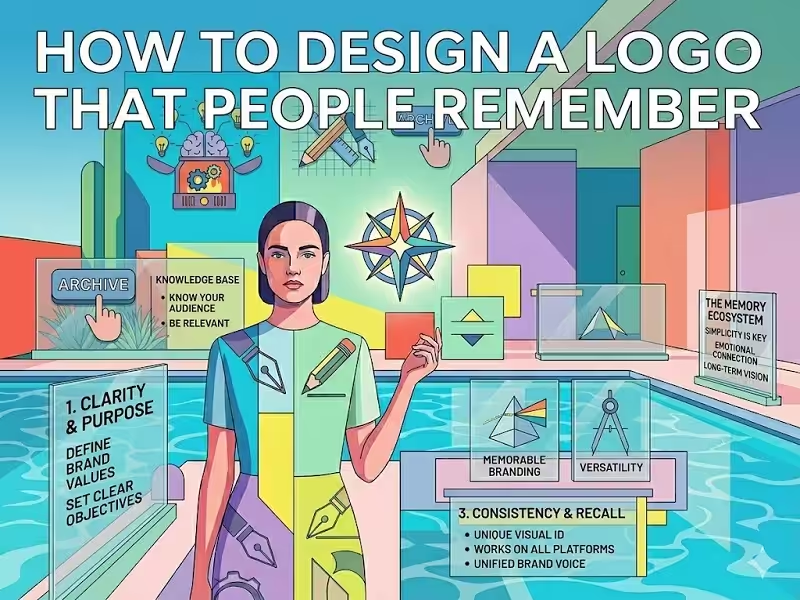
How to Design a Logo That People Remember
What if we say, ‘think about any three logos?’ You might imagine the brands that have a strong impact on your mind, even if you don’t regularly purchase from them. This is what you can call a memorable logo.
A logo is a crucial step in starting any business. Brands create logos to represent their values, including identity, mission, and vision. Creating a memorable logo that people remember may seem simple, but it is not.
Crafting a logo requires a powerful strategy, an understanding of brand concepts, and color schemes that tell a brand story. Businesses design an effective identity for their brand and help consumers to build an emotional connection with their products and services.
What Makes Your Logo Memorable to People
The majority of consumers recognize the brand just by looking at the logo. You may have heard stories about iconic brands like McDonald’s, Nike, and Starbucks. They have been created by a logo designer and have been evolving for better memorability. What makes them classic? Here are the features below:
- Simplicity: The first quality of a logo is its ability to be remembered. A clear and clean logo is easy to recognize, whether on a tiny website or a large billboard.
- Brand Identity: Your logo should be designed with your brand voice in mind and aligned with your target audience.
- Originality: The logo’s uniqueness makes it stand out and memorable in a visually busy world.
- Versatility: Your logo should work everywhere without losing its impact. From a business card to a large screen, it should remain effective and visible.
- Timeliness: Avoid falling into trends and make your logo unique, with longevity in mind. It will be relevant for years to come.
Steps to Make Your Logo Stand Out
Making a good logo requires the right strategies and effective methods to make it memorable to people while ensuring it reflects the brand’s values.
1. Understand Your Brand Identity
Before diving into the design of your business logo, understanding your brand identity is crucial. Know about your core values, vision, mission, and unique selling point (USP) that sets you apart from others. Research about your target audience, their preferences, and demographics. Understanding these core features will help you pick the right color and shape while ensuring the design speaks directly to your consumers.
2. Keep it Simple
Simplicity is the key element of every logo. It can be more recognizable and versatile across wide applications if it is clutter-free. A clear icon with minimal elements is more powerful and enhances recognition. Simple logos can be used in every size and everywhere, from social media platforms to billboards for advertisements.
3. Choose the Right Colors
Colors are powerful tools that are directly connected to customers’ emotions. Consider color psychology when selecting a palette that reflects your brand. For example, blue is often linked with trust, calmness, and intelligence, while green is associated with growth and sustainability. The same approach is commonly used in book cover designing, where colors help readers understand the mood and genre of a book before reading a single page. Choosing the right palette can completely change how people connect with a design. To keep things clean and memorable, it’s usually best to limit the design to two or three main colors.
4. Pick Appropriate Typography
Typography is a crucial part of your logo and plays an important role in representing your brand, along with colors. Pick a font that suits the brand and color schemes of your logo. You can start with the classic serif and sans-serif typefaces that align with your brand and are visible at any size.
5. Make it Versatile
Create a versatile logo that is functional and legible at every size, from a small icon on a social media platform to a large banner. Ensure that your logo works well in black and white format. A versatile design is easy to use for every marketing strategy.
6. Add Symbol or Icon
Create a unique logo symbol that relates to your products and services. Elements in your design can enhance recognition and build a deeper connection with your audience.
7. Make it Timeless
Trends come and go; if you follow a trend, you will get stuck in a cycle of revamping. Better to avoid them and create a logo that lasts for years. Focus on classic designs to avoid the hassle of redesigning and to build long-term brand recognition.
8. Get Feedback
Send your logo for a review from your potential customers, colleagues, and friends. Ask for honest reviews and feedback to improve. Be open to suggestions from multiple people.
9. Finalize a Logo
Refine the results and make adjustments through valuable insights and highlighted areas of improvement. Ensure to finalize the logo of your dream that speaks your brand voice and identity. Make a final decision and place your logo on your social media, business cards, infographics, annual report designing, etc.
Frequently Asked Questions—FAQs
What are the most important aspects to remember when designing a logo?
The key components to follow when designing a logo are:
- Simplicity
- Versatility
- Uniqueness
- Timeliness
- Brands voice
What is the golden principle to design a memorable logo?
The golden rule when designing a logo is to make it unique, so it differentiates it from other brands. This avoids confusion between the brand identities.
What are the mistakes to avoid when designing logos?
If you want to make a unique and memorable logo for your brand, you must have to avoid some mistakes that are:
- Overcomplication by adding multiple elements.
- Following trends causes redesigning hassle.
- Ignoring the scalability that allows it to adjust to different sizes.
- Rushing to finalize and not proofreading.
- Poor fonts and color choices.
Final Thoughts
Every brand has a story to tell its audience. Mixing colors, shapes, and fonts together does not make an effective and unique logo. A business crest must represent a brand identity and a deep, full meaning of its products and services.
Symbolizing a brand means incorporating the brand people can trust, the brand’s story, and how it can benefit consumers. That is the purpose of crafting a logo that represents it all and sets your brand apart from others who are offering similar products. Your business story should be unique, and your logo should be too, so people remember it.