

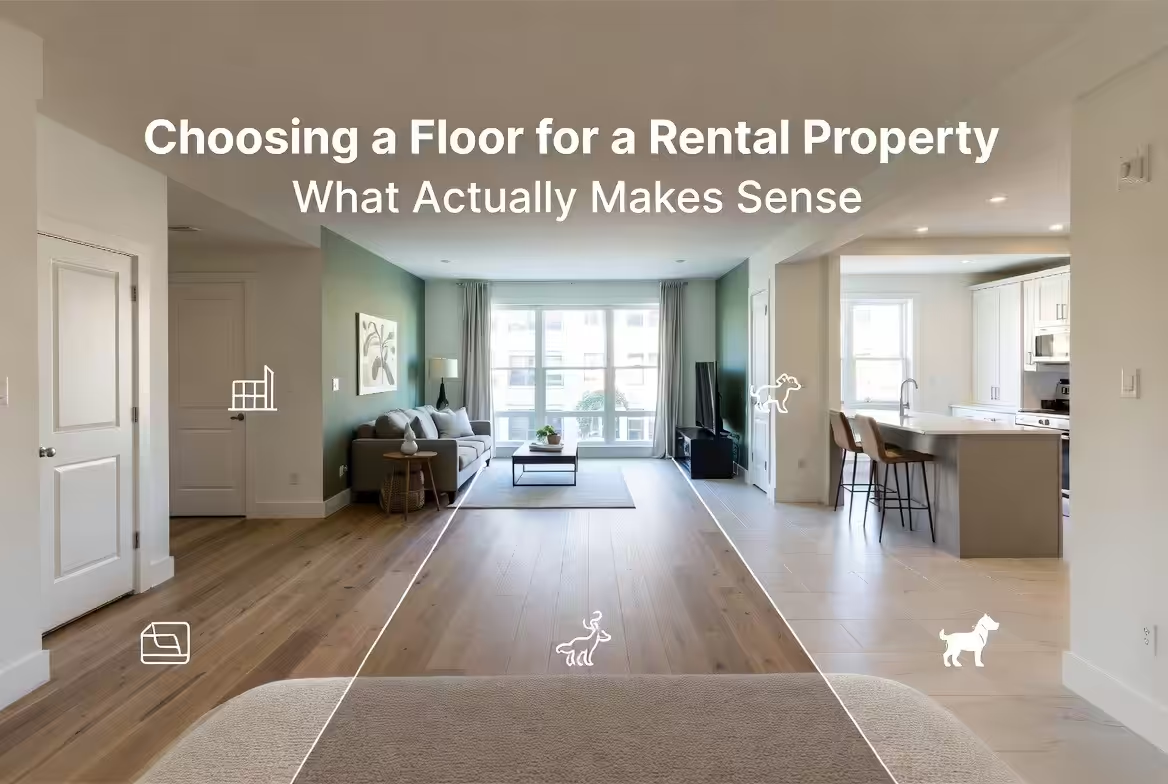
Choosing a Floor for a Rental Property: What Actually Makes Sense
Choosing flooring for your home is usually different from choosing it for a rental. Most landlords choose flooring for their rental properties simply by going for whatever looks acceptable at the lowest possible cost and move on to the next decision. Fair enough, as time is short, budgets are tight, and flooring feels like a detail compared to the bigger decisions that come with managing a property.
The problem is that flooring in a rental property is never really a detail. It’s the surface every tenant walks on daily, the most abused part of the property, and the most expensive to fix if done wrong.
The landlords who spend the least on flooring over the long term are almost never the ones who bought the cheapest option at the beginning. They’re the ones who bought the right option once and didn’t have to think about it again for a decade.
The Rental Property Flooring Problem
Why Cheap Flooring Costs More Than Good Flooring Over Time
There is a calculation that most landlords do when choosing flooring for a rental property, and it goes roughly like this. The tenancy is uncertain; added to that, the tenant might be careless. Therefore, why invest heavily in a floor that might sustain damage within a year?
That logic feels sound, and it leads directly to a cycle that costs considerably more than the alternative. And just after a few years, it needs replacing entirely.
Therefore, the right flooring for a rental property isn’t the most expensive option. It’s the one that performs reliably over multiple tenancies, looks satisfactory enough to support a competitive rental price, and doesn’t need replacing every three years.
The Appearance vs. Durability
The other mistake landlords make consistently is choosing flooring based entirely on how it looks in a photograph rather than how it performs under real conditions. A floor that looks beautiful in a showroom but scratches easily, shows every footprint, or responds badly to moisture is a liability in a rental property regardless of how appealing it looked on the day it was installed.
The floors that work best in rental properties share a specific set of characteristics:
1. They’re durable enough to handle tenant wear without showing it prematurely.
2. They’re easy to clean and maintain between tenancies.
3. They’re neutral enough in tone and character to appeal to a wide range of tenants rather than dividing opinion.
4. They’re resilient enough that minor damage can be addressed without replacing the entire floor.
Oak Laminate Flooring
What Oak Laminate Does Well in a Rental Context
Oak laminate flooring has dominated the UK rental property market for good reasons that go beyond price. At its best, oak laminate offers a warm, natural appearance that photographs well, appeals to a broad range of tenants, and holds up to daily wear considerably better than its reputation sometimes suggests.
The practical advantages in a rental context are specific and real. Oak laminate is easy to clean; it’s resistant to the kind of surface scratching that happens naturally in any occupied home. And when sections are damaged beyond repair, individual boards can often be replaced without lifting the entire floor, which changes the economics of damage significantly compared to flooring types where any significant repair means a complete replacement.
Engineered Flooring
The Case for Engineered Flooring in the Right Rental Property
Engineered flooring sits above oak laminate in terms of both cost and quality, and the question for landlords is always whether the premium is justified. The honest answer is that it depends on the property, the likely tenant profile, and the rental price point being targeted.
For higher-end rental properties this flooring does something that oak laminate cannot. It looks and feels like real wood, because the top layer is real wood, and that quality is perceptible to tenants who are comparing multiple properties at a similar price point. A property with genuinely well-engineered flooring photographs better, lets more easily, and supports a higher rental value than the same property with mid-range laminate.
The practical advantage of engineered wood flooring over solid wood in a rental context is stability. The layered construction of engineered boards means they move less with changes in temperature and humidity than solid wood, which makes them more forgiving of the kind of variable heating patterns and ventilation habits that characterise occupied rental properties. A well-specified engineered floor in a rental property, properly installed and maintained, should last significantly longer than any laminate option.
Unfinished Wood Flooring
What Unfinished Wood Flooring Actually Is
Unfinished wood flooring is precisely what the name suggests. It has real wood boards supplied without any factory-applied finish, which are installed and then finished on-site by the installer. The finishing process typically involves sanding, staining if required, and applying oil or lacquer after the boards are laid.
For most rental properties, unfinished wooden flooring is not the obvious first choice, and it’s worth being honest about why. The installation process is more involved than laying pre-finished boards; the drying time for the finish adds days to the project timeline, and the floor needs to be kept clear of traffic while the finish cures. None of these factors are ideal when you’re trying to prepare a property quickly for new tenants.
Where Unfinished Wood Flooring Makes Genuine Sense for Landlords
There are specific situations where unfinished wooden flooring is genuinely the best option for a rental property, and they’re worth knowing about.
Period properties are the primary case. Victorian and Edwardian houses with original suspended timber subfloors, uneven surfaces, and room proportions that require a floor with real character greatly benefit from unfinished wooden flooring finished on-site. The ability to sand and finish after laying means the floor can be brought level with adjacent surfaces, colour matched to existing woodwork, and finished in a way that pre-finished boards simply cannot achieve.
The other situation is a long-term refurbishment of a property you intend to hold for many years. Unfinished wooden flooring finished on-site with a hardwax oil produces a floor that can be lightly sanded and re-oiled when it begins to show wear, which is a process that restores it to something very close to its original condition without replacing it. Over a twenty-year hold period, that refinishing capability changes the total cost of the floor significantly.
Summing Up
To sum up, conducting a thorough analysis of various flooring options is crucial when planning the flooring for your rental home. A smart choice will outlast one chosen solely for its appearance and price.
Author Bio:
Olivia Martin is a content creator with a passion for home improvement and home décor. She enjoys sharing practical tips, creative design ideas, and inspiring solutions that help homeowners create beautiful, functional living spaces. Through her writing, Olivia aims to make home projects more approachable and help readers transform their homes with confidence.