

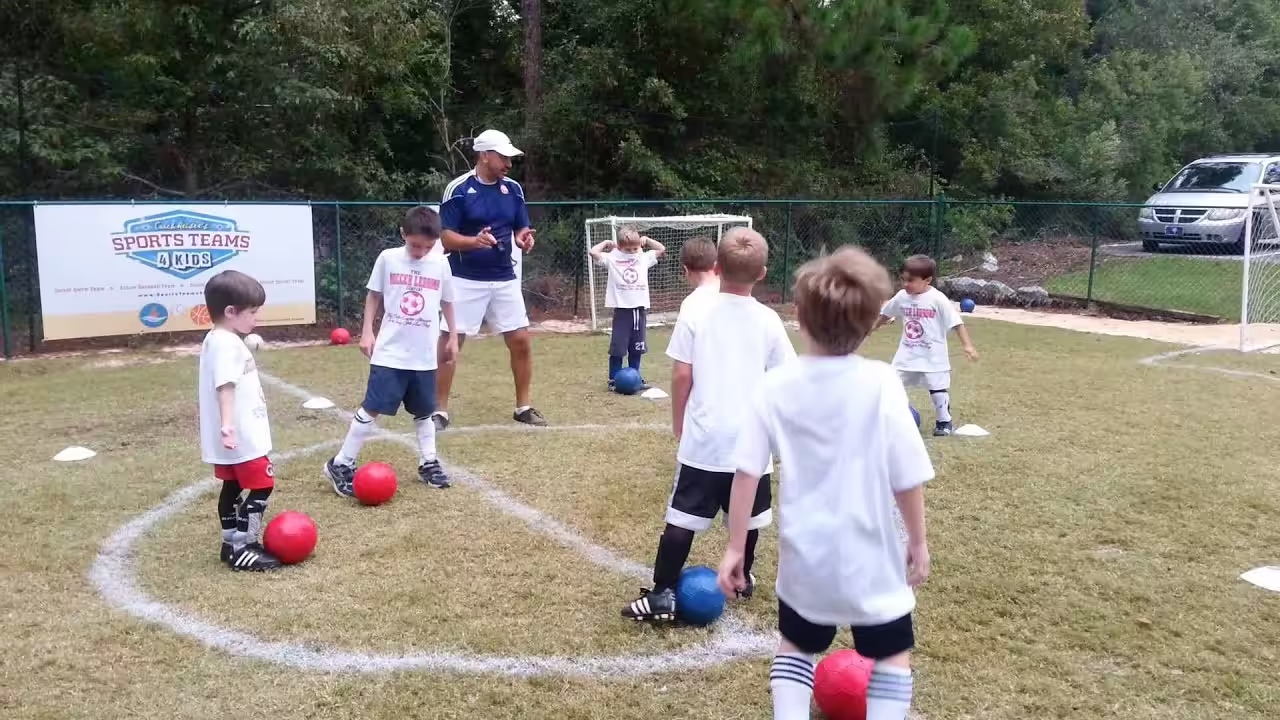
The Physical and Mental Health Benefits of Joining the Best Soccer Academy in Sydney
Children have a natural desire to move. They run, jump, chase, climb, and explore because movement is one of the main ways they learn about themselves and the world around them. Giving children regular opportunities to be active can support their physical growth while helping them develop confidence, communication skills, and emotional resilience.
Soccer is particularly suitable for young children because it combines exercise with play. A child does not need advanced skills or a deep understanding of the game to participate. Simple activities such as following a ball, kicking towards a target, changing direction, and taking turns can introduce important movement patterns in an enjoyable way.
For parents searching for the best soccer academy in Sydney, the quality of the learning environment matters as much as the sport itself. Super Best Friends provides age-appropriate soccer programs for children from 18 months to seven years, focusing on fitness, motor development, confidence, teamwork, and character building.
Building Stronger and Healthier Bodies
Regular physical activity supports healthy growth during childhood. Australian movement guidelines explain that being active can benefit children’s physical health, emotional wellbeing, social development, confidence, concentration, and cooperation. Children aged five to 17 are encouraged to complete at least 60 minutes of moderate-to-vigorous physical activity each day.
Soccer encourages children to move in many different ways. During a typical class, they may run towards markers, dribble around obstacles, stop a moving ball, practise passing, or chase teammates during a game. These activities engage the legs, hips, core, and upper body.
Regular participation can help children work on:
- Cardiovascular fitness and stamina
- Muscle strength and healthy bone development
- Balance and body control
- Flexibility and agility
- Speed and reaction time
- General physical confidence
Young children do not need intense workouts to experience the benefits of movement. A well-planned kids soccer Sydney program turns exercise into play, making children more likely to remain engaged without feeling pressured.
The objective is not to push children beyond their abilities. It is to help them move regularly, enjoy being active, and gradually become more capable.
Improving Balance, Coordination, and Motor Skills
Early childhood is an important period for developing fundamental movement skills. Before children can confidently participate in advanced sports, they need to learn basic actions such as running, stopping, balancing, turning, jumping, and kicking.
Soccer brings many of these movements together. When a child kicks a ball, they must watch its position, place one foot beside it, balance their body, and move the other leg with the right amount of force. Although this action looks simple, it involves visual awareness, timing, coordination, and lower-body control.
The Australian Government notes that physical activity for young children mainly occurs through active play. Toddlers and preschoolers benefit from opportunities to explore different movements throughout the day rather than remaining inactive for long periods.
Age-appropriate toddler soccer Sydney sessions can support this process through simple and imaginative games. Younger children might roll, chase, or gently kick a ball, while older participants can begin learning passing, dribbling, goalkeeping, and team-based movement.
Super Best Friends separates its programs by age group, allowing coaches to choose activities that suit each child’s stage of development. This helps children progress without being expected to perform skills that are too advanced for them.
Supporting Confidence and Emotional Wellbeing
The mental health benefits of children’s sport should not be overlooked. Participating in a new activity can help children become more comfortable with unfamiliar people, environments, and challenges.
At first, a child may feel nervous about entering a class or joining a group. Patient coaching and positive encouragement can gradually make the environment feel familiar. Completing small tasks, such as kicking the ball into a goal or following a short set of instructions, gives the child a meaningful sense of achievement.
These moments can strengthen self-belief. Children begin to understand that they do not have to perform perfectly on the first attempt. They can practise, make mistakes, try again, and improve.
The World Health Organization identifies physical activity as beneficial for children’s physical fitness, bone health, cognitive development, motor development, and mental wellbeing.
Supportive soccer coaching Sydney programs should therefore recognise effort, persistence, and progress rather than focusing only on winning. Coaches who respond calmly to mistakes can help children become more resilient and less afraid of trying unfamiliar activities.
For some children, this confidence extends beyond the field. A child who learns to speak to a coach, join a group exercise, or recover after missing a goal may become more comfortable participating at preschool, school, or in other social settings.
Learning Teamwork and Social Skills
Soccer gives children regular opportunities to interact with others. Even simple group exercises can teach them how to listen, share space, wait patiently, and cooperate.
During soccer training Sydney sessions, children may learn to:
- Take turns during activities
- Listen and respond to instructions
- Pass the ball to a teammate
- Encourage other players
- Respect simple rules
- Manage excitement and disappointment
- Celebrate group achievements
These skills are valuable in everyday life. Cooperation and communication are needed in classrooms, family settings, playgrounds, and future workplaces.
Physical activity with other people can also support children’s language, communication, and social development. Enjoyable activities may help them build physical skills, confidence, and a positive attitude towards movement.
Super Best Friends places character building alongside soccer development. Its coaches aim to create an environment where children can make friends, become more outgoing, and understand what it means to contribute to a group.
Why Age-Appropriate Coaching Is Important
A toddler cannot be coached in the same way as a teenager or adult. Young children have shorter attention spans and are still developing their ability to understand instructions, control emotions, and coordinate movement.
Effective children’s coaching should use short explanations, demonstrations, repetition, imaginative games, and frequent encouragement. Activities should also change often enough to maintain interest.
Parents assessing the best soccer academy Sydney offers for young children should look for a program that provides:
- Sessions designed for specific age groups
- Patient and encouraging coaches
- Safe and manageable activities
- Equal opportunities to participate
- A balance between learning and fun
- Positive communication with parents
- A focus on wellbeing and development
A strong academy does not judge success only by how many goals a child scores. Improvement may also appear when a child listens more carefully, joins a group without hesitation, waits for a turn, or continues trying after making a mistake.
Developing a Positive Relationship With Exercise
One of the greatest long-term benefits of children’s soccer is its ability to make physical activity enjoyable. Children are more likely to remain active when movement is associated with friendship, play, encouragement, and achievement rather than pressure.
A weekly class cannot provide all the physical activity a child needs, but it can become an important part of an active routine. Families can support that routine by walking together, visiting parks, playing with a ball at home, and limiting long periods of inactivity.
Super Best Friends offers outdoor classes in Epping and programs in Kensington for children aged 18 months to seven years. Its flexible packages allow young players to develop at a manageable pace while building fitness, coordination, teamwork, and confidence.
Every child develops differently. Parents should choose activities that match their child’s interests and abilities. Children with health conditions, injuries, or specific developmental needs may require advice from an appropriate healthcare professional before joining a new sport.
Conclusion
Soccer can support far more than athletic ability. Running, kicking, balancing, listening, and playing with others can contribute to physical fitness, motor development, emotional resilience, communication, and social confidence.
Super Best Friends combines playful learning with structured soccer coaching in Sydney, helping children develop skills without losing the enjoyment that makes sport meaningful. Its programs are designed to build strong physical foundations while encouraging teamwork, decision-making, and positive character.
Parents seeking a supportive soccer academy can explore Super Best Friends’ classes in Epping and Kensington. By introducing children to movement in a fun and encouraging environment, families can help them develop healthy habits and confidence that may continue well beyond the soccer field.
Frequently Asked Questions
At what age can children start soccer?
Children can begin introductory soccer activities from around 18 months when classes use safe, supervised, and developmentally appropriate games.
How can soccer improve a child’s physical health?
Soccer encourages running, turning, balancing, kicking, and changing direction. These movements can support fitness, coordination, muscle development, and general body control.
Can soccer support children’s mental wellbeing?
Positive classes can help children build confidence, manage small challenges, interact with others, and experience a sense of achievement.
Is toddler soccer competitive?
Toddler programs should focus primarily on active play, basic movement, listening, enjoyment, and confidence rather than results or serious competition.
Where are Super Best Friends classes available?
Super Best Friends provides children’s soccer programs in Epping and Kensington, NSW, for age groups ranging from 18 months to seven years.