

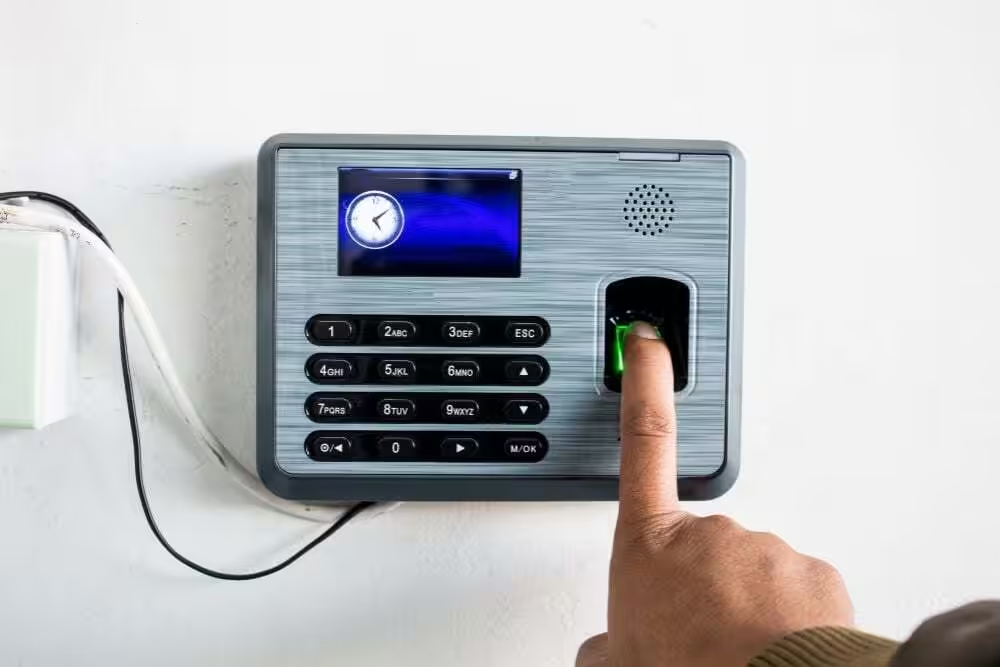
Smart Time Clock Systems to Streamline Employee Attendance Tracking
Managing employee attendance has evolved far beyond traditional punch cards and manual registers. In today’s fast-paced business environment, companies need efficient, reliable, and accurate tools to track working hours and ensure payroll accuracy. This is where modern time clock systems come into play, offering smart solutions that simplify attendance tracking while improving overall workforce productivity.
Whether you run a small business or manage a large enterprise, adopting the right time tracking technology can make a significant difference in how your organisation operates.
What Are Time Clock Systems?
Time clock systems are digital or biometric tools designed to record employees’ working hours. These systems replace manual attendance logs and reduce human error by automating the tracking process.
Modern systems can include features such as:
- Biometric authentication (fingerprint or facial recognition)
- Mobile app clock-ins
- GPS tracking for remote workers
- Cloud-based data storage
- Integration with payroll software
By implementing time clock systems, businesses can ensure that employee attendance is recorded accurately and transparently.
Why Businesses Are Switching to Smart Time Tracking
The shift toward digital solutions is driven by the need for efficiency and accountability. Manual tracking methods are prone to errors, time theft, and administrative burden.
Here’s why smart systems are becoming essential:
1. Improved Accuracy
Automated attendance tracking eliminates guesswork. Employees clock in and out using secure methods, ensuring precise records.
2. Reduced Time Theft
Features like biometric verification prevent “buddy punching,” where one employee clocks in for another.
3. Simplified Payroll Processing
Accurate data flows directly into payroll systems, reducing calculation errors and saving time.
4. Real-Time Insights
Managers can access live attendance data, helping them make informed decisions quickly.
Businesses adopting time clock systems often notice immediate improvements in operational efficiency and employee accountability.
Key Features of Modern Time Clock Systems
Not all systems are created equal. The best solutions offer a range of features designed to suit modern workplaces.
Biometric Authentication
Fingerprint and facial recognition ensure secure and tamper-proof attendance records.
Cloud-Based Access
Cloud systems allow managers to monitor attendance from anywhere, making them ideal for remote or multi-location teams.
Mobile Compatibility
Employees can clock in using their smartphones, especially useful for field workers and remote staff.
Integration Capabilities
Seamless integration with HR and payroll software reduces administrative work.
Reporting and Analytics
Detailed reports help track employee performance, overtime, and attendance patterns.
When businesses invest in advanced time clock systems, they gain more than just attendance tracking—they unlock valuable workforce insights.
Benefits for Small and Large Businesses
For Small Businesses
Small businesses often operate with limited resources, making efficiency critical. Time clock systems:
- Reduce administrative workload
- Minimise payroll errors
- Improve employee accountability
For Large Enterprises
Large organisations benefit from:
- Centralised data management
- Scalability across multiple locations
- Advanced reporting for workforce planning
Regardless of business size, implementing time clock systems helps create a more structured and transparent work environment.
How Time Clock Systems Improve Productivity
Productivity isn’t just about working longer hours—it’s about working smarter. Time clock systems contribute to this in several ways:
Clear Work Hour Tracking
Employees become more conscious of their time, leading to better discipline and focus.
Reduced Administrative Tasks
HR teams spend less time managing attendance and more time on strategic initiatives.
Better Workforce Planning
Managers can analyse attendance trends to optimise staffing and reduce downtime.
By leveraging time clock systems, businesses can create a culture of accountability and efficiency that directly boosts productivity.
Choosing the Right Time Clock System
Selecting the right system depends on your business needs. Here are some factors to consider:
Business Size and Structure
Choose a scalable solution that can grow with your business.
Workforce Type
If you have remote employees, opt for mobile or GPS-enabled systems.
Budget
Balance cost with features to ensure long-term value.
Ease of Use
A user-friendly system ensures smooth adoption by employees.
Security Features
Look for systems with strong authentication methods to prevent misuse.
Taking the time to evaluate these factors ensures that your investment in time clock systems delivers maximum returns.
Common Challenges and How to Overcome Them
While time clock systems offer numerous benefits, businesses may face challenges during implementation.
Employee Resistance
Some employees may be hesitant to adopt new technology.
Solution: Provide proper training and highlight the benefits.
Initial Setup Costs
Advanced systems may require upfront investment.
Solution: Consider long-term savings in payroll accuracy and efficiency.
Technical Issues
Like any digital tool, systems may face occasional glitches.
Solution: Choose a reliable provider with strong customer support.
With the right approach, these challenges can be easily managed, allowing businesses to fully benefit from their systems.
Future Trends in Time Clock Systems
Technology continues to evolve, and time clock systems are no exception. Here are some trends shaping the future:
AI-Powered Analytics
Artificial intelligence will provide deeper insights into workforce behaviour and productivity.
Contactless Technology
Post-pandemic workplaces are adopting touchless clock-in options like facial recognition.
Integration with Workforce Management Tools
Future systems will seamlessly connect with scheduling, performance tracking, and HR platforms.
Enhanced Mobile Capabilities
Mobile-first solutions will become the standard for remote and hybrid work environments.
Businesses that stay ahead of these trends will gain a competitive edge in workforce management.
Final Thoughts
Smart time clock systems are no longer a luxury—they are a necessity for businesses aiming to improve efficiency, accuracy, and productivity. By automating attendance tracking and integrating it with broader business processes, these systems help organisations operate more smoothly and transparently.
From reducing payroll errors to enhancing employee accountability, the benefits are clear. Investing in the right solution can transform how your business manages time, one of its most valuable resources.
If you’re looking to streamline operations and boost productivity, adopting modern time clock systems is a smart and strategic move.