

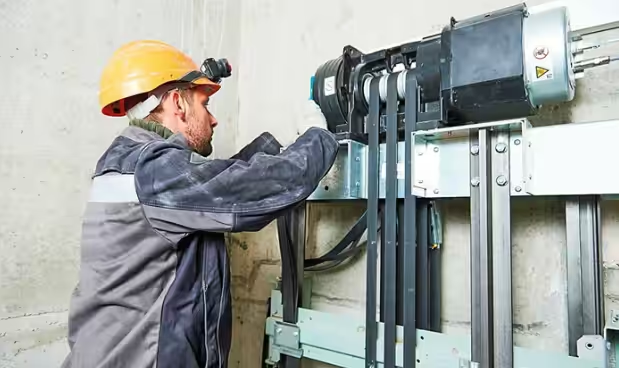
What Defines Residential Elevator Repair in Modern Homes
Home lifts are significant to the modern house, as they provide safe and straightforward up and down movements. The system components wear over time and impact performance, safety, and reliability. Frequent check-ups and servicing on time assist in keeping the operations stable and minimize unexpected breakdowns in everyday use settings.
We will take appropriate care in the current housing system to ensure long-term functionality and a consistent user experience. Residential elevator repair fixes mechanical and safety issues that arise with the use. It guarantees elevators operate safely, in accordance with the anticipated performance in residential buildings, and it provides the occupants with reliable access.
Understanding Residential Elevator Repair in Modern Homes
Residential elevator repair is the process of identifying and fixing the malfunctions in the home lifts. The performance, safety, and reliability of the system determine the nature of these repairs. Technicians determine the condition of the system and fix problems by component.
This procedure also brings elevators to conform to the prevailing safety standards. It makes the systems work effectively at home.
What Does Residential Elevator Repair Entail
Home lift repair will involve various components of the system:
- Mechanical systems deal with motors, cables, and braking units that regulate the lift movement.
- Electrical systems are comprised of controllers, wiring, and sensors that control operations.
- Safety mechanisms include alarms, emergency communication, and backup mechanisms.
All the components are important in providing smooth and safe elevator operation.
How Residential Elevators Differ from Commercial Systems
There are various differences between residential and commercial elevators. They deal with lesser load capacity and less frequency of usage. They are also designed with a greater emphasis on smaller areas in homes.
Common Issues That Define Residential Elevator Repair Needs
Residential elevator repair is needed when systems exhibit abnormalities in their operation. These are problems that impact home performance and safety.
Abnormal Sound and Robotics
Abnormal sound may be a sign of mechanical wear in the system. The presence of grinding or vibration is an indicator of misalignment or wearing out of the components. The problems should be checked immediately to avoid any additional harm.
Malfunctions of doors and sensors
The breakdown of doors interferes with the regular use of elevators. The doors can either be unable to open or close because of the misalignment of the sensors. These defects have an impact on safety and usability.
Delays of Movement and Performance
Slow movement causes a lack of efficiency in day-to-day activities. There can be slow responses or irregular elevator stops. These symptoms depict internal system problems.
Failure of the Power and Control System
The cause of power failures is usually as a result of faulty wiring or control panels. These problems interfere with intercommunication amongst system parts. Consequently, elevators can break or malfunction.
Residential Elevator Repair Safety and Compliance
One of the primary considerations of house elevator repair is safety. The systems should meet the required standards for use in homes to ensure security.
Essential Safety Components in Home Elevators
Home elevators are dependent on safety parts to ensure that they operate in a controlled manner. The braking systems ensure that there is no sudden movement in case of faults. In the event of a system failure, emergency alarms offer a way to communicate.
In the event of a power outage, backup power systems continue to operate. These characteristics ensure safe usage in various conditions.
Inspection Requirements for Residential Elevators
Residential elevators should be checked regularly to ensure that they are compliant. Inspection authorities evaluate the functionality and safety aspects of the systems. Certification will guarantee that the lifts meet the necessary standards.
Regular inspections minimize the chances of unforeseen breakdowns. They are also reliable in terms of long-term systems.
Delayed Repair risks in Home Elevators
Delay in repairs puts the safety and operation at risk. When the systems are faulty, they may fail when in use, posing hazards to the occupants. Such cases also make homeowners more liable. Timely repairs and ensuring the stability of the systems minimize these risks.
Key Components Involved in Residential Elevator Repair
The repair of elevator systems in residential facilities has a few major elements that determine the functionality of the system. All the components have to be evaluated and serviced.
Mechanical Systems and their use
Mechanical systems physically move elevators. Pulleys and cables control the direction of lift, and motors create motion. The wear on these components impacts overall performance.
Electrical and Control Systems
Elevators are controlled by electrical systems that use controllers and sensors. Circuit boards are in charge of communication between parts. Malfunctions in these systems cause irregular functioning.
Cabin and Door Mechanisms
Cabin structures offer stability and guarantee passenger space. Door mechanisms manage the entry and exit when in operation. The automation systems facilitate the smooth operation of the doors.
Signs That Indicate Residential Elevator Repair Is Required
There are indicators that indicate when repair on residential elevators would be required. Such indications are indicative of system inefficiencies and operational risks.
Constant Collapses and Interruptions of Services
Breakdowns are common, which signifies a decreasing reliability of the system. Breaks occur on a regular basis and indicate more serious mechanical problems.
Higher Maintenance over the years
The older the systems, the higher the maintenance costs. The high frequency of repairs and replacement of parts puts a strain on the budget. This pattern suggests that there should be systematic repair solutions.
Unstable Operation and User Complaints
Unreliability in operation exasperates users. Unpredictable movement or sudden stops reduce system reliability. We need to address these issues.
Factors in Residential Elevator Repair Cost
The cost of residential lift repair is dependent on a number of factors. All factors are determined by the type of system and repair.
Repair Type and Component Repair
Minor repairs entail small adjustments to components. Significant repairs involve the replacement of some crucial components. The kind of repair will influence the levels of cost.
Complexity of the Model and System of Elevators
The complexity of the system affects the need to repair. Hydraulic systems are different in structure and operation as compared to traction systems. Specialized expertise is required in complex systems.
Labor and Inspection Costs
Labor costs depend on the technicians’ tech level and the project’s scope. Inspection costs are also an outlay. Compliance processes increase the overall cost.
Modern Technologies Used in Residential Elevator Repair
The use of modern technologies in repairing elevators in homes is . These technologies aim to monitor and enhance the efficiency of the systems.
Adaptation of Smart Monitoring Systems
Smart monitoring systems, based on IoT diagnostics, track the performance. Such systems spot faults in action. Early identification minimizes the chances of the system’s failure.
Energy-Efficient Upgrades in Home Elevators
Upgrades that are energy efficient save energy. LED lighting and effective motors reduce the cost of operation. These technologies are in accordance to the contemporary residential standards.
Best Practices for Managing Residential Elevator Repair
Good management is a way of ensuring that the system’s performance is consistent. The owners of property adopt systematic procedures in order to be reliable.
Regular Inspection Scheduling
Periodic checkups ensure system health. Planned servicing detects the possible problems at an early stage. This method minimizes unforeseen failures.
Monitoring System Performance
The performance of the monitoring systems is monitored to ensure that they are continuously running. A history of repair can be monitored to determine frequent problems. This information is used to make informed decisions on maintenance.
Conclusion
Residential elevator repair guarantees uniform security, dependability, and functionality in contemporary homesteads. It covers mechanical degradation and electrical and system defects that occur over time. Quick repairs reduce the likelihood of breakdowns and guarantee compliance with safety standards. Maintenance also increases the lifespan of the system and usability per day. In the contemporary domestic setting, it is still necessary to have elevator functions that are stable and have a secure environment.
FAQs
Why does a home elevator give strange noises?
Abnormal noise is normally caused by aged parts of machinery or loose parts. The routine check-up will allow for determining the precise source in time.
What is the cause of home elevators moving slowly after some time?
Reduced movement is typically caused by wear on the motor or problems with the control system. These issues are built up during usage.
What are the key elements within a home elevator system?
A home elevator consists of mechanical components, electrical, and safety devices. Components are all compatible to operate in a stable manner.
What is the frequency of check-ups for a home elevator?
The majority of residential systems are to be serviced on a regular basis all year round. Periodic inspections assist in keeping safety and performance levels.