

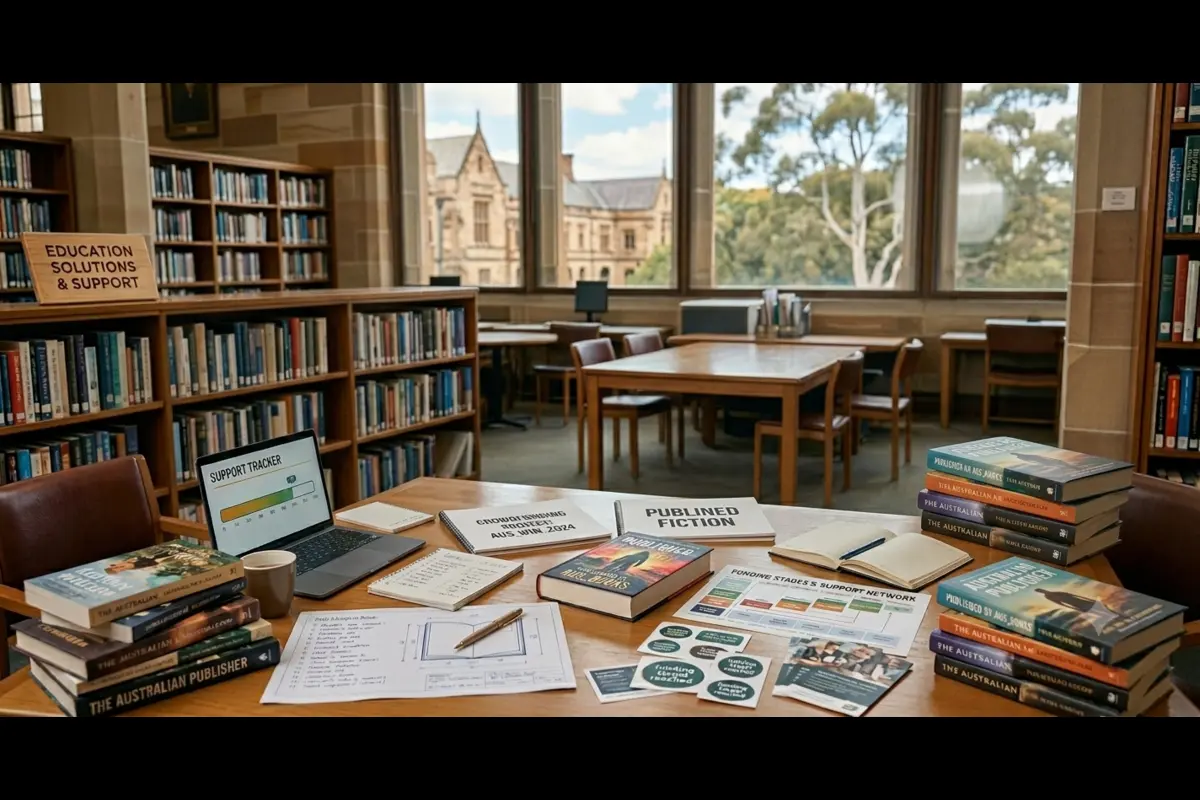
Crowdfunding Wins with Australian Publishers’ Support
In Australia, the chances of a book being published can easily skyrocket with a crowdsourcing campaign done right. When a publisher backs, mentors, or collaborates on a book, it naturally becomes significantly more powerful.
Most authors consider crowdfunding to be their last resort. Today, however, that landscape is changing in the literary world. Independent authors are mounting campaigns to finance full print runs and professional production, and national publishers are starting to join the fray.
Why Crowdfunding and Publishing Work Better Together Than Apart
A publisher provides credibility, distribution and production skills. A crowdfunding campaign offers insight into audience and direct reader relationships that a marketing budget can’t provide. They work together to fill in each other’s weaknesses.
Crowdfunded books with Australian publishers are a force to be reckoned with. It tells backers that the book has been vetted by others who understand the industry and can help secure media, trade, and retail placements, which a self-funded book rarely gets on its own.
The win is mutual. When authors get resources and reach, publishers will have the opportunity to acquire books they might otherwise have ignored in the past due to their niche, first-time author status, or experimental format, and will split the financial burden with an audience already hungry for the book.
What Makes a Crowdfunded Book Campaign Actually Work in Australia?
There is a unique Australian culture of literature. Here, readers are truly invested in supporting local voices, and that is reflected in their crowdfunding behaviour. Campaigns that are based around a clear Australian identity, a regional setting, a First Nations perspective, and an underrepresented community story are all much more successful than generic campaigns.
There are a few similarities in the campaigns that have succeeded in achieving their goals. A particular pitch that conveys precisely why this book is needed, reward tiers that feel genuinely valuable. And a warm audience already in place before the campaign opens, not people the author is meeting for the first time on launch day.
How Publishers Are Getting Involved in Crowdfunding
What Publisher Involvement Actually Looks Like
Some situations are formal co-publishing, with the publisher covering production costs and the campaign covering distribution/marketing. Others are lighter, such as endorsements, common announcements or introductions to their distributor network.
Even the most scarce publisher involvement changes the whole perspective of the book. Backers who may have been wary of a new author are much more likely to invest when publishers attach their name to a crowdfunded title. The turning of the tide of trust can make the difference between a campaign that falters and one that flourishes during the first 48 hours.
How to Pitch a Publisher on Getting Involved
Bring an audience and a solid campaign idea, and a nearly final manuscript. Publishers who are looking at getting involved would like to see that the risk is manageable, because if the campaign is one that needs saving, they’d much rather not save it.
Demonstrate the value of their participation in the campaign and the value of the campaign to them. Best partnerships are those that are mutually beneficial. The pitch needs to clearly and concisely make that point.
Building Your Audience Before the Campaign Opens Is Non-Negotiable
The worst thing first-time crowdfunders do is consider the successful launch of their campaign as the beginning of their audience building. At the time the page goes live, there should be people waiting to back the page.
The reasonable minimum is 3-6 months of steady content and community activity leading up to launch. That means following your audience, literary festivals, online book communities, writing groups, and genre social media. This is multiplied by the power of the publisher’s audience when they are lending it to a campaign, which must start from scratch without their involvement.
Production Quality Is What Separates Funded Campaigns from Forgotten Ones
Why Your Cover Is the Most Important Asset on the Campaign Page
Backers of the book are paying before it is even created. All of the graphical components of the campaign need to convey this message: The completed book will be worthwhile. That quality is most clearly indicated by the book cover design.
The book must be available to backers and stand apart on the shelves alongside traditionally published books, as it has been professionally designed. If you don’t have a strong or compelling cover, then you’ll put your crowdfunding campaign on hold, and that leads to inconsistencies in the campaign.
What Else the Campaign Page Needs to Get Right
The hook is the cover, but the remainder of the page needs to keep the reader interested. The most important thing to keep in mind is that:
- Make a point of being tight, specific and written to respond to the reader’s first question: why does this book need to exist?
- In all the above categories, reward tiers, signed editions, limited variants and early access have proven to be more effective than generic structures and personalised acknowledgements.
- Record videos of yourself and other people with a positive attitude and not an apologetic one. Backers would like to feel like they are investing in a person, not a product.
- Use high-resolution images throughout. When images are blurry or show placeholders, the campaign may feel inadequate.
FAQs
Can indie authors pitch Aussie publishers for crowdfunding?
Yes, in fact, it happens more often than most authors realise. Bring an audience through an idea that is well developed and a draft manuscript.
Which book campaign reward levels are most appropriate for Australia?
Personalised acknowledgements and early access, signed first editions and limited print runs with special cover variants are always better than generic structures. Events related to the book, such as a virtual reading and a Q&A, also convert well because they are not offered anywhere else.
What should be the cost for the writer to start a campaign?
Professionally produced assets, including design, photo, video, and copy, realistically range from $2,000 – $5,000 AUD. One of the best ways to ensure a campaign that doesn’t cost money is to avoid being underprepared.
Bottom Line
It’s not luck, it’s preparation, it’s a real community, it’s a book that looks and reads like it belongs there: that’s what it takes to be a successful book. Publisher support speeds all that up, but can’t replace the work; that’s something you will always have to give your all for.
Ensure the correct audience is reached, ensure the book looks like it belongs on the bookshelf and establish industry connections before you need them. Once all that is done, a crowdfunding campaign is no longer a gamble; it’s a launch.