

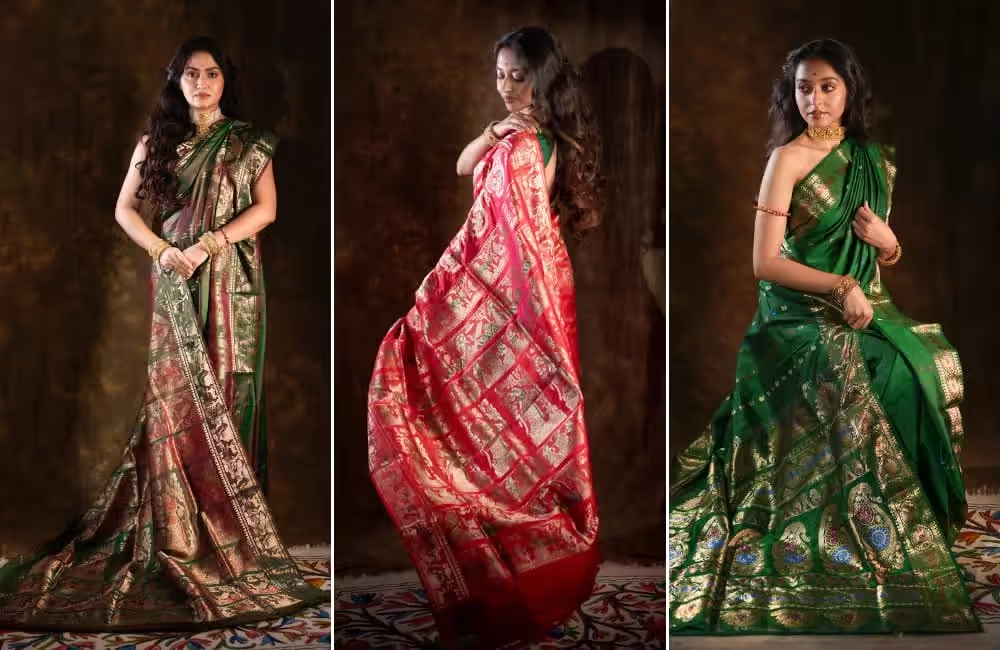
Baluchari vs Banarasi Silk Saree: How to Tell the Difference
There’s that moment every woman goes through while shopping for her first silk saree – you spot a gorgeous drape with intricate motifs and instantly think, “Wait… is this a Baluchari or a Banarasi?”
And it’s not your fault. At first glance, both look equally grand, especially at weddings or festive gatherings. But once you understand the story behind each weave, the differences become easy to notice.
For anyone who loves Indian textiles like Baluchari cotton sarees, knowing how to identify the silk variant is like learning two different dialects of one language. Both Baluchari and Banarasi are rooted in tradition, both are woven in silk, and both hold an important place in bridal fashion. Yet, they carry very different identities.
Let’s explore these differences!
The History and Origin Behind the Weaves
The Baluchari saree comes from Bengal, specifically from the town of Bishnupur in West Bengal today, though its roots trace back to Murshidabad. Historically, these sarees were known for narrating stories through woven motifs. Baluchari designs often show scenes from mythology, royal courts, musicians, dancers, and everyday life. This storytelling style is what makes the Bengali Baluchari saree unique.
Banarasi silk sarees, on the other hand, originated in Varanasi, one of the oldest weaving centres in India. Influenced heavily by Mughal artistry, Banarasi became known for floral patterns, jaal work, paisleys, and metallic zari weaving. These sarees were woven for royalty and continue to be associated with North Indian bridal traditions.
Interestingly, as traditions evolved, both weaves found their own place in Bengali weddings.. A Banarasi saree is traditionally linked with the wedding ceremony itself, while Baluchari sarees are often worn during receptions, pujas, or family celebrations after marriage. This emotional connection keeps both weaves deeply relevant in Bengali households.
Fabric and Texture: What Makes Them Feel Different?
One of the easiest ways to distinguish these sarees is by feeling the fabric’s texture.
A traditional Baluchari saree is usually lighter and softer compared to a Banarasi silk saree. The 100% pure mulberry silk used in Baluchari weaving has a smoother fall, which makes the saree feel more fluid when draped. Some contemporary weavers also create Baluchari cotton sarees for women who prefer lighter fabrics for regular wear or smaller occasions.
Banarasi sarees generally feel heavier because of their dense weaving and zari work. The richness comes from the metallic threads woven throughout the body and border. Authentic Banarasi often has a structured drape that gives it a regal appearance.
This difference becomes obvious during weddings. Brides who choose Banarasi usually want a more elaborate and formal look. Those who choose Baluchari silk sarees want more elegance with slightly less weight.
Today, many people looking to shop Baluchari silk sarees online compare textures carefully because photos alone can’t fully capture the weave’s softness. Brands like Katha: A Tale of Weaves often help buyers understand how unique handloom Baluchari is through detailed descriptions and images.
Understanding the Weave and Motifs
The weave is where the real distinction begins.
Handloom Baluchari sarees are famous for narrative motifs placed mainly on the pallu and borders. If you look closely, you may recognise scenes from the Ramayana or Mahabharata, women playing instruments, or figures engaged in conversation. The designs almost resemble miniature paintings woven into silk.
Banarasi sarees focus more on ornamental beauty than storytelling. Their motifs include floral vines, intricate jaal patterns, kalga, bel work, and Mughal-inspired detailing. Zari is central to the Banarasi identity, giving the saree its signature shine.
Another difference lies in the weaving technique. Baluchari weaving uses extra weft techniques to create detailed figurative motifs, while Banarasi weaving often combines brocade techniques with zari integration.
The reverse side can also offer clues. In many Baluchari sarees, the back of the motifs appears cleaner, with threads neatly defined. Banarasi sarees may show floating threads due to the brocade weaving style.
Experienced saree collectors often identify a weave simply by looking at the pallu. A storytelling pallu usually points toward Baluchari craftsmanship, while dense zari florals indicate Banarasi tradition.
When you walk into a Kolkata saree boutique the next time, you’ll know better!
The difference between a handloom Baluchari and a Banarasi isn’t just about motifs or weaving techniques. It’s really about the stories they carry. Banarasi sarees reflect royal opulence and Mughal influence. Timeless Baluchari sarees preserve Bengal’s artistic storytelling heritage through silk.
Once you know what to look for—fabric weight, zari work, motifs, and drape, identifying them becomes much easier. More importantly, you begin to appreciate why both continue to hold such an important place in Indian wardrobes.
For saree lovers, understanding these details adds another layer of meaning to every weave you choose to wear.
FAQs
- Where do Baluchari sarees originate from?
Baluchari sarees trace their roots to Baluchar, a small village in Murshidabad, West Bengal. Over time, this storytelling silk tradition found its true home in Bishnupur, where skilled artisans continue to preserve and weave it with care. Today, authentic handloom Baluchari cotton and silk sarees are still celebrated through saree brands in Kolkata like Katha: A Tale of Weaves.
- Which is heavier, a Banarasi or a Baluchari saree?
Banarasi sarees are generally heavier due to the extensive use of metallic gold and silver zari threads. Baluchari sarees, while rich, rely primarily on resham (silk) threads for their narrative designs. This makes Banarasis shimmer with opulent weight, while Balucharis feel lighter, emphasizing artistry and storytelling.
- How do I properly maintain and store silk sarees?
Dry clean your sarees to preserve the silk and zari. Store them wrapped in soft muslin or cotton cloth in a cool, dry place, and periodically refold them to prevent creases.