

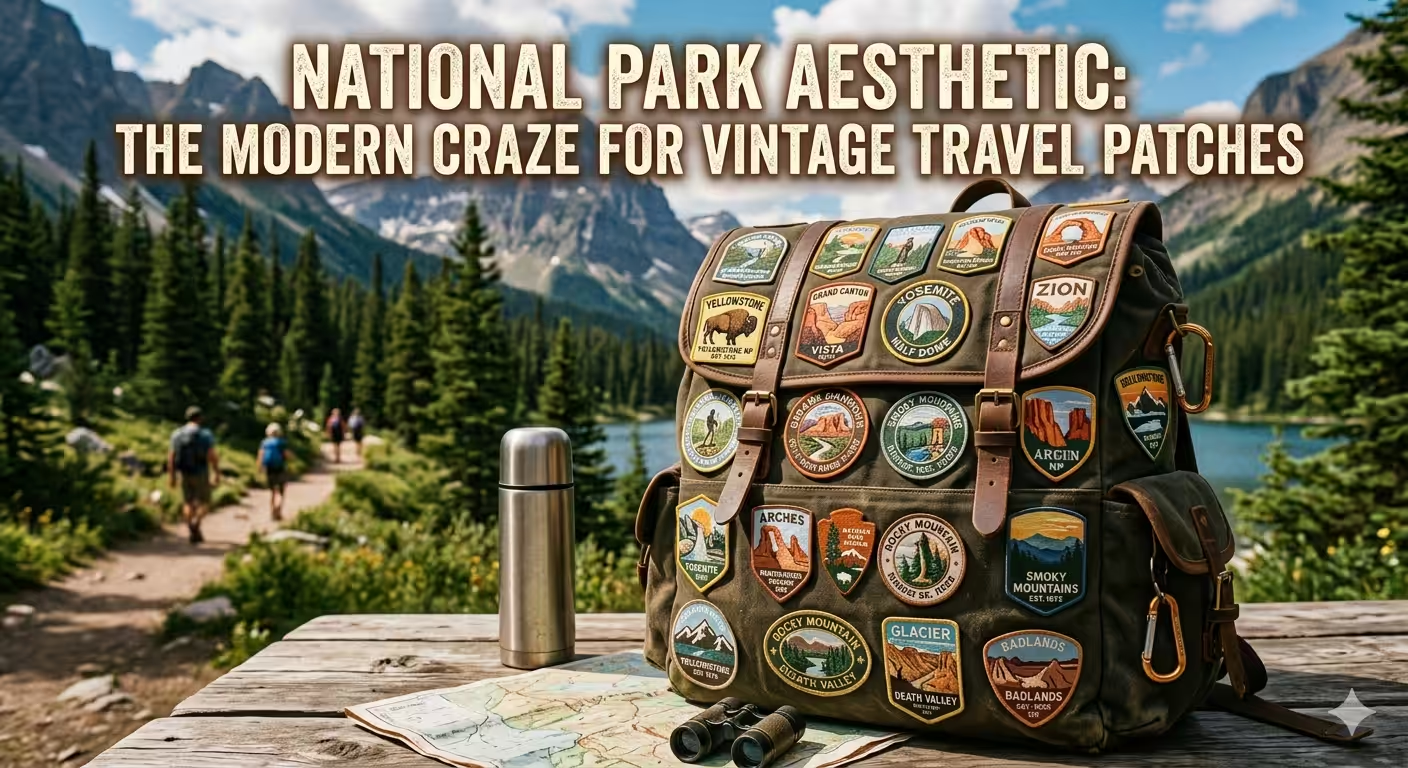
National Park Aesthetic: The Modern Craze for Vintage Travel Patches
In 2026, the “National Park Aesthetic” has moved beyond the gift shops of Yosemite and Zion to become a dominant force in global fashion and interior design. This trend—often called “Gorpcore Heritage”—blends the rugged utility of outdoor gear with a deep, nostalgic longing for the golden age of American travel. At the heart of this movement is a small, tactile piece of history: the travel patch.
The resurgence of vintage-style patches isn’t just about tourism; it’s a visual protest against the sterile, hyper-digital world we inhabit. In an era of AI-generated landscapes, a physical, embroidered badge represents a real-world achievement a mountain climbed, a trail hiked, or a park visited. For brands and individuals alike, capturing this “National Park Look” is about more than just a logo; it is about signaling a commitment to conservation, adventure, and the “Human-Made” signal.
The WPA Legacy: Flat Design in a 3D World
The visual language of this trend stems from the Works Progress Administration (WPA) posters of the 1930s and 40s. These posters used bold, flat colors and simplified geometric shapes to sell the majesty of the American wilderness to a weary public. Today, that same aesthetic is being translated into fabric.
Modern designers are moving away from photorealistic prints in favor of stylized, badge-style graphics. When creating a brand identity inspired by this era, many startups look to custom embroidery patches no minimum order services to test limited-run designs. This allows creators to experiment with the thick, satin-stitch borders and “toasty” earth tones—burnt orange, forest green, and mustard yellow—that define the vintage National Park look. These patches act as a “tactile business card,” turning a modern jacket into a storied piece of heritage gear.
The “Ranger” Look: Authority Meets Adventure
A major component of the National Park aesthetic is the borrowing of “Authority Signals.” The crisp, structured uniform of a Park Ranger conveys trust, knowledge, and a guardianship of nature. 2026 streetwear has adopted this “Guardian” persona, using structured canvas vests, gilets, and utility shirts.
To ground these outfits in professional credibility, details matter. In the corporate world, companies are ditching generic plastic badges for a more permanent feel. High-end outdoor hospitality brands often buy nametag patches to give their staff a “Ranger-adjacent” appearance. These fabric nametags, usually featuring classic serif typography and a simple border, bridge the gap between “Employee” and “Expert Guide,” enhancing the guest experience through visual storytelling.
Collectibility and the “Traveler’s Armor”
Why are we so obsessed with patches in 2026? It’s because of their “Collectibility Score.” Unlike a t-shirt that wears out or a sticker that fades, a patch is designed to be moved from one garment to another. It is “Traveler’s Armor”—a growing record of a person’s life experiences.
This sense of permanence is driving a new market in luxury accessories. While patches offer a soft, rugged feel, some brands are seeking a more refined way to celebrate their milestones. For anniversary events or high-end club memberships, luxury custom lapel pins have become the preferred “hard-good” equivalent of the travel patch. Made from polished enamel or brushed metals, these pins add a touch of “Executive Explorer” to a blazer or a backpack strap, offering a sophisticated contrast to the heavy textures of embroidered fabric.
The “Anti-Digital” Movement
As screens become more pervasive, the physical world has become the new luxury. The National Park aesthetic is a celebration of the “Analog.” This is why we see a rise in “scuffed” textures, raw edges, and visible stitching.
When a brand adopts this look, they are telling their audience: “We are real. We are here. We have dirt under our fingernails.” This is especially powerful for tech companies in the UK and UAE who want to soften their image. By adding a vintage-style patch to their corporate merchandise, they transform a “Tech Giveaway” into a “Heritage Item.” It moves the brand from the “Cloud” back down to the “Earth.”
Designing for the 2026 Trailblazer
If you are looking to build a brand or a wardrobe around the National Park aesthetic, follow these three design principles:
- Simplify the Iconography: Stick to the “Single Twist” rule. Use one powerful icon (a pine tree, a jagged peak, or a bear) rather than a busy scene.
- Choose “Grown-Up” Colors: Avoid neon or “synthetic” colors. Look to the natural world—terracotta, slate, lichen, and bark.
- Mix Your Materials: Don’t just stick to cotton. Mix in leather, wool, and heavy canvas to give your branding a “Multi-Dimensional” feel.
Conclusion: The Enduring Power of the Badge
The National Park aesthetic is more than just a fashion trend; it is a cultural anchor. In 2026, as we look toward a future of rapid technological change, we find comfort in the symbols of the past. The travel patch, the nametag, and the lapel pin are not just accessories—they are emblems of a life lived outdoors.
By embracing these tactile markers, we tell the world that we are adventurers, conservationists, and storytellers. Whether you are sewing a patch onto a vintage denim jacket or pinning a luxury emblem to a structured coat, you are participating in a century-long tradition of celebrating the wild places that shape us. The “National Park Look” isn’t about looking like you’re in the woods; it’s about carrying the spirit of the woods wherever you go.